Hey readers,
It's Marina here.
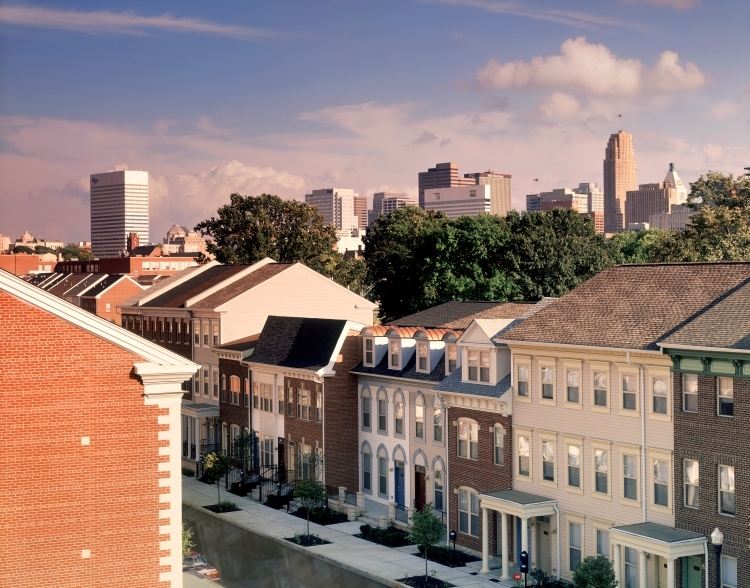
America's era of big public housing projects was a grand experiment whose period of favor was remarkably short-lived. The austere, often high-rise complexes rose across US cities in a few decades, mostly from the 1930s to 1960s. But as they became marooned by chronic disrepair and concentrated poverty, the political consensus to tear them down formed just as quickly. By 1992, Congress had created the HOPE VI program, which provided funding to demolish many distressed public housing buildings in cities across the US and replace them with new, mixed-income developments. These newer developments have been made up of a mix of public housing, subsidized housing, and market-rate units, often consisting of low-rise townhomes and smaller apartment buildings that were much more integrated into surrounding city street grids. It was a "dramatic turnaround" in US housing policy, as a report from the Urban Institute, a social and economic policy think tank, put it. It also drew a chorus of opposition at the time, from those who feared — not entirely incorrectly — that residents would be displaced and not all demolished housing units would be replaced.
To understand how that policy shift has impacted the lives of families in the intervening decades, a team of scholars, including Harvard economist Raj Chetty, known for his field-defining work on the drivers of economic mobility in the US, looked at some 200 housing projects revitalized under HOPE VI in cities across the US — from Atlanta to Seattle to El Paso. They found that HOPE VI dramatically increased the future earnings of low-income children who grew up in the rebuilt neighborhoods — crucially by allowing them to form friendships with more affluent children. The findings are reported in a recent working paper published by the National Bureau of Economic Research. That cross-class integration greatly benefits poor kids may not sound like a surprising discovery. Children are sponges for the expectations and examples that surround them, exquisitely sensitive to what the world trains them to believe is possible. But Chetty and his co-authors show these effects in housing projects with more rigorous social-scientific methods than has been done before, representing a new generation of evidence on how neighborhoods can transmit advantage, or heighten disadvantage. The findings harmonize with canonical critiques of America's midcentury planning mistakes, together offering an explanation for what went wrong with US public housing, and a blueprint for building cities that enable social connection and broadly shared prosperity and dignity. |
Courtesy of Torti Gallas + Partners | |
|
What happens when you breathe new life into public housing
The researchers focused primarily on the outcomes of about 109,000 children born between 1978 and 1990 who grew up in HOPE VI-renovated public housing. Compared with their peers who remained in non-revitalized public housing, children in the HOPE VI cohort were 17 percent more likely to go to college, boys were 20 percent less likely to later become incarcerated, and they saw an increase in projected lifetime earnings of nearly $500,000 each.
For every year that they lived in the new housing, children's future earnings grew on average by 2.8 percent. Low-income adults in the new developments, though, did not see these same benefits, reflecting the importance of the formative years when peer groups and life expectations take root. The researchers attribute these outcomes to the early social connections that lower-income kids formed with nearby higher-income peers.
And the results were not, they found, explained by other factors, like low-income children simply attending better-integrated schools; the same gains were not observed for nearby children who likely attended the same schools but remained in unrevitalized housing. Rather, the results depended on the mixed-income residential areas that put kids' day-to-day social worlds into contact. The researchers validated these ties using a number of empirical methods, including data from Facebook that they used to measure friendships across class lines.
The original housing projects, by contrast, did not facilitate mixed-income social interaction; in fact they obtrusively cordoned off poor families from the rest of the city as if by intention. "Distressed public housing projects were essentially islands that had limited social interaction with nearby communities," wrote the paper's authors, who include researchers from Harvard, Cornell University, and the US Census Bureau.
These projects did not merely segregate rich and poor neighborhoods — their very physical design was stigmatizing and hostile: often large towers collected together, set back amid isolating open space. The 20th-century writer and urbanist Jane Jacobs excoriated this midcentury urban design philosophy, of which public housing projects were a part; she argued this approach disregarded human needs and treated cities as machines that could be reorganized from the top down.
The impoverishing effects of housing projects, she argued, were not just the product of hyper-concentrating poverty, but also a consequence of a particular approach to cities — one that was fundamentally anti-urban and destructive to city life.
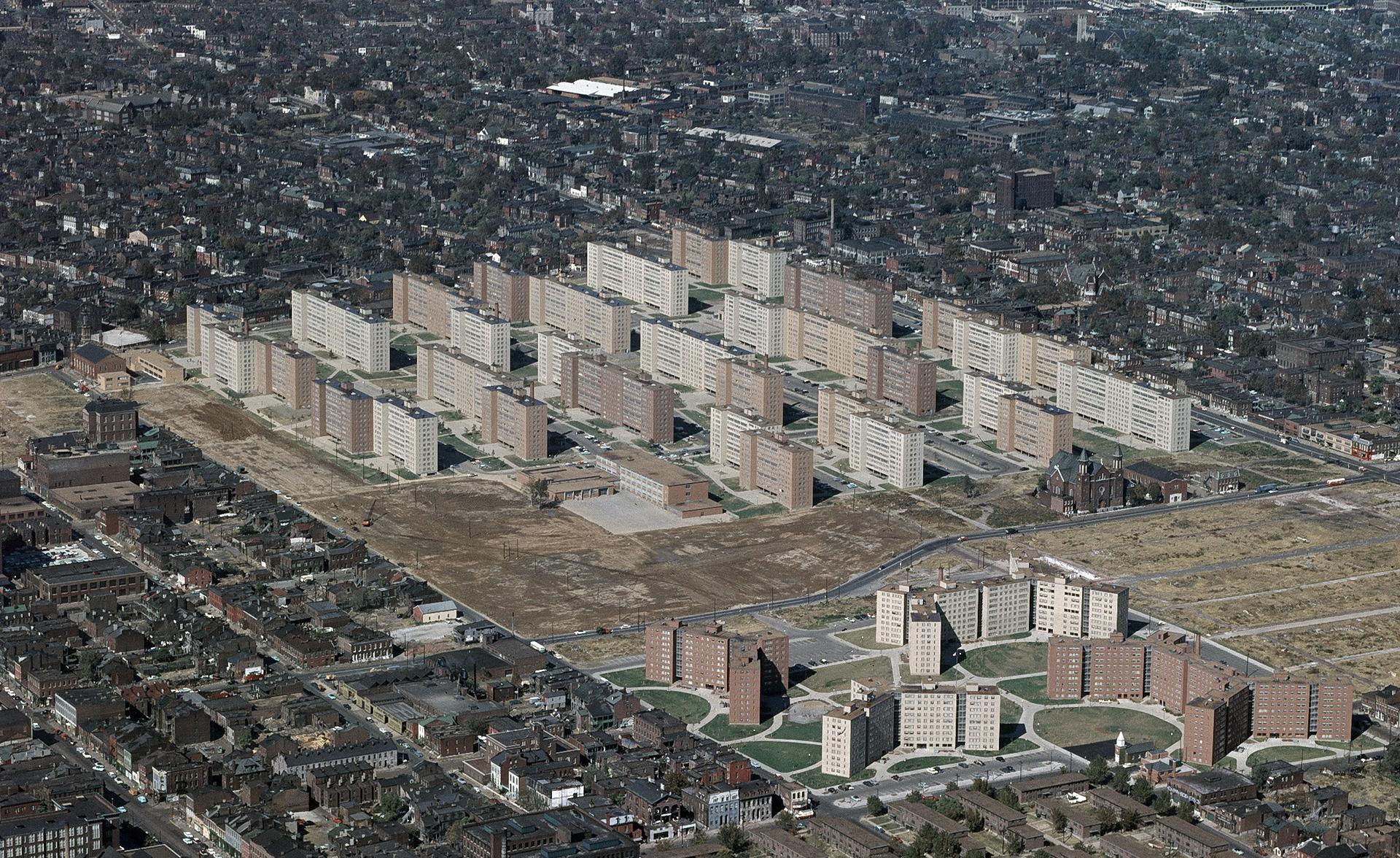
It might sound strange to call the residential towers characteristic of public housing projects "anti-urban." Aren't tall buildings and dense housing the essence of urban life? But consider this image of Pruitt-Igoe, a notorious St. Louis public housing project that lasted not two decades before its demolition began in the 1970s: |
US Geological Survey, via Wikimedia Commons |
Unlike in the surrounding city street grid, this complex lacked human-scale streets, convenient businesses, or any other woven-in destinations to facilitate what Jacobs called the "intricate sidewalk ballet" of a healthy city. The project was instead a desolate island of indeterminate spaces that separated low-income households from the rest of the city, and made that segregation all the worse with vast dead zones that repel normal activity. The crime that came to define the public image of housing projects like this one was a product not of the moral failings of residents, Jacobs argued, but of the emptiness that stripped families of the safety mechanisms that ordinary city neighborhoods possess. Jacobs's problem was not with density, which she celebrated as indispensable to city vitality, but with this style of building. And her critique has now been validated by the outcomes from Hope VI, which recognized the problems with isolated superblocks and aimed to integrate public housing back into the city fabric. We can apply these lessons today Of course, American public housing was not merely some conspiracy to conscript poor people into an experiment in inhumane design. Similar to the modernist apartment blocks going up across many urban centers around the world at the time, US public housing stemmed from a real need to replace overcrowded, substandard dwellings with homes that offered basic modern safety features and amenities like indoor plumbing and heat. In the abstract, it was a beautiful, utopian idea, but its ambitions were marred by structural racism, underinvestment, and a design philosophy that reinforced segregation and social isolation. Although Chetty and his co-authors don't dive into debates about the merits of modern architecture, they put into stark quantitative terms what qualitative scholars have long observed: The design of our built environment can have profound effects on the course of our lives. At $17 billion, the cost of HOPE VI might sound daunting. But the economic gains to the children who grew up in the new housing greatly exceeds the costs to the government of revitalizing each unit, the researchers found (they don't, however, claim to know whether the program's benefits make up for all of its costs, including costs to the residents who were displaced from original public housing units and unable to return). And we can learn from its lessons today — we are, of course, still living with the consequences of class segregation and poor urban planning. The average low-income neighborhood in the US today, the study notes, is just as isolated as the decrepit projects that HOPE VI helped rebuild. The scarred legacy of the projects has strained public faith in public housing, but there is still an important role for government to play in providing housing to people who can't afford it on the private market, helping them weave into the city fabric and connect to diverse social networks. This kind of cross-class living and mobility is, after all, the great promise of city life. |
|
|
| Marina Bolotnikova Senior reporter |
|
|
| Marina Bolotnikova
Senior reporter |
|
|
I'm in the mood for learning about... |
|
|
The Vox Membership program is getting even better with access to Vox's Patreon, where members can unlock exclusive videos, livestreams, and chats with our newsroom. Become a Vox Member to get access to it all. |
|
|
The case against owning small pets |
Your pet fish — or bird, or hamster — is probably miserable. |
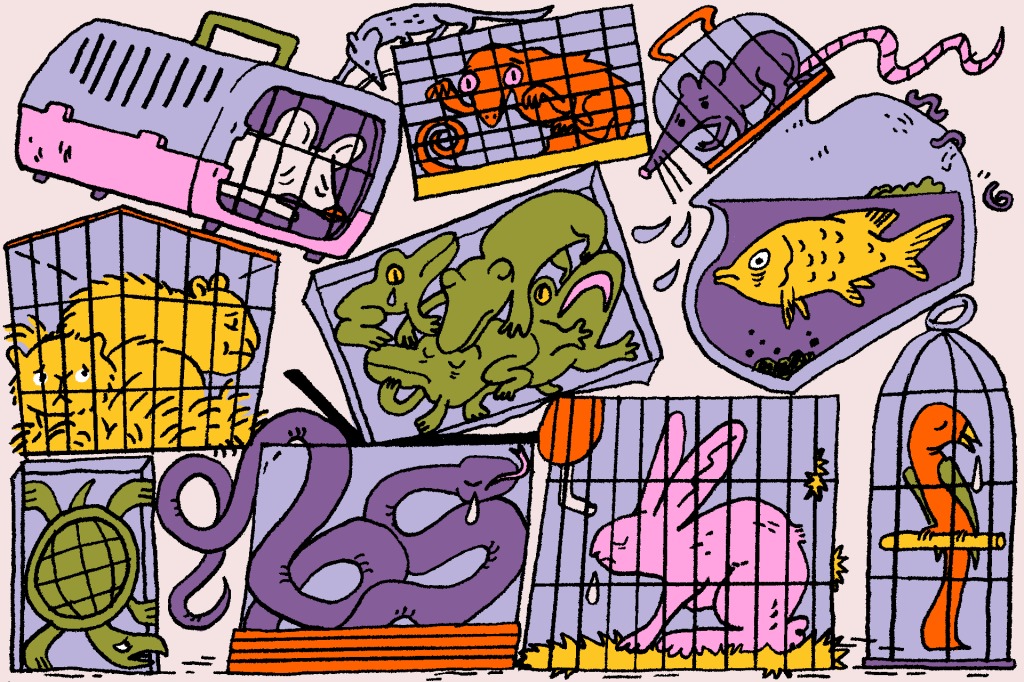
It often seems as if a pet fish has one job: make you feel like a responsible person. But my colleague Kenny Torrella is here to ruin that vibe — with good reason. In his new Highlight feature, he argues that America's "small pets" — fish, birds, hamsters, reptiles — are often miserable, trapped in cages and tanks that block the behaviors that make them live, like flying and swimming. And it's not just the enclosure. Kenny reports on cruel breeding, bad diets, and little vet care — plus a pet trade so global that one estimate puts US imports of exotic animals at around 90 million a year. About a third of those animals are snatched from the wild, with many dying in transit. So what's the humane response: better standards, fewer species for sale, or simply, fewer pets? Kenny walks through ideas like "positive lists" and pet-store bans — and the uncomfortable possibility that some animals simply don't belong in our homes. — Bryan Walsh, senior editorial director |
|
|
CAN'T STOP THINKING ABOUT... |
|
|
Poly want a… market? Earlier this week, the online prediction markets Polymarket and Kalshi entered into a bizarre free grocery stunt public relations war. Kalshi fired the first shots with a Partiful inviting New Yorkers to wait in the cold for hours so they could enjoy a $50 grocery tab "on us." Then, Polymarket debuted a rendering for what it's calling "New York's first free grocery store" — if you count farmers' markets, it isn't really, by the way — with plans to open its no-cost pop-up shop later this month for five days only, just in time for Valentine's Day. It's giving your local casino handing out free buffet vouchers. It's giving "let them eat groceries." Only in this case, we're playing with a city where almost one in four kids is food insecure and about half of working-age households struggle to make ends meet. Whatever ungodly amount of money has gone into these stunts could easily have fed far more New Yorkers far more effectively if it went to local hunger charities instead. But hey, you won't catch me complaining about free groceries. I will, however, complain about the timing. If you haven't heard, the Bad Bunny halftime show, I mean the Super Bowl, is this weekend. Polymarket and Kalshi are both expecting to earn a profits bonanza from users betting on Benito's first song ("Tití Me Preguntó" is in the lead), which team will win, and which brands will air ads. And since these increasingly popular platforms remain incredibly under-regulated and are not treated as the sports gambling meccas they've become, they pay far less in taxes than they probably should.
Not so incidentally, the free grocery market stunts come as New York state officials and lawmakers have been closing in on new regulations for online prediction platforms. But will a five-day free store really be enough to sway away the regulators? Sorry, Polymarket. I wouldn't bet on it. |
|
| ⭐ ONE WAY TO DO GOOD THIS WEEK |
After the Taliban retook control of Afghanistan after the US withdrew in 2021, millions of Afghans fled the country. About 200,000 refugees settled in the US on humanitarian grounds. allowing them temporary permission to stay. Last year, the US stopped processing all immigration requests from Afghanistan, ended Temporary Protected Status for Afghans, and began cracking down on Afghan immigrants who are here on a green card. But deportation to Afghanistan could mean torture and death at the hands of the Taliban. There's been a lot of focus on ICE activity in Minnesota, and Afghans are among those being targeted. The Afghan Cultural Society of Minnesota — which connects refugees to social and vocational services — is building a legal aid fund for Afghan, Syrian, and Sudanese detainees in ICE custody to meet the moment. You can donate to them here. — Shayna Korol, Future Perfect fellow |
|
|
Want more Future Perfect in your inbox? Sign up for more newsletters here. Need advice? Submit a question to Sigal Samuel's advice column Your Mileage May Vary. |
| |
Today's edition was edited and produced by Izzie Ramirez. We'll see you Wednesday! |
|
|
|