Plus: How friendships can fuel self-knowledge
|
|
|
Welcome to the Saturday edition of The Conversation U.S.’s Daily newsletter. Who knew a small cartoon mouse could become an avatar for geopolitics, the culture wars and debates over representation? With Warner Bros. recently announcing that Speedy Gonzales will star in his own animated feature, University of Colorado Boulder media scholar Jared Bahir Browsh tells the story of the “fastest mouse in all of Mexico,” from his origins as an offshoot of FDR’s Good Neighbor Policy to the character’s removal from the air as networks became more sensitive to stereotypes, to the backlash that ensued from the clever mouse’s Latin American fans. At the heart of Speedy’s story are cultural questions that are still being contested today: Who gets to decide what’s offensive? Is cancel culture in retreat? And can old characters be adapted for new audiences? This week we also liked stories about why the Persian Gulf region has so much oil and gas, research showing honey bees are not a threat to native bees, and the perils of Trump’s increasingly violent rhetoric on Iran. Did somebody forward this email to you? Subscribe to our daily and weekly newsletters here. |
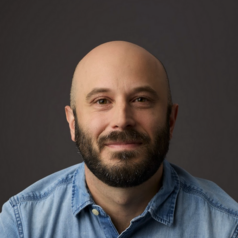 |
Nick Lehr Senior Arts + Culture Editor |
|

The cartoon mouse was taken off the air over concerns about damaging stereotypes, only to be brought back when Hispanic American groups protested. wiredforlego/flickr
Jared Bahir Browsh, University of Colorado Boulder The comeback story of ‘the fastest mouse in all of Mexico’ reveals how audiences – not cultural gatekeepers – shape the meaning of representation. |

Friends can see and know you in ways that you yourself never can. Stephen Simpson/Stone via Getty Images
Ross Channing Reed, Missouri University of Science and Technology It may seem like a paradox, but it takes good friends for someone to really understand themselves – and grow in virtue, as Aristotle argued. |

Iranians hold national flags in Tehran’s Revolution Square on April 8, 2026, after the United States and Iran agreed to a two-week ceasefire. Atta Kenare/AFP via Getty Images
Donald Heflin, Tufts University Both countries seem tired of the costs of war and ongoing risks, but successful negotiations will have to overcome deep distrust by both sides. |
|
 Christina Grozinger, Penn State; Andony Melathopoulos, Oregon State University; Clare Rittschof, University of Kentucky; Harland Patch, Penn State; Jay Evans, Agricultural Research Service, USDA The accusations you might have heard about nonnative honey bees aren’t backed up by evidence. In fact, there are plenty of ways bees make the world a better place. |
|
 Derek Arnold, Villanova University In the early days of the United States, Philly was a hotbed of conspiracy theories as fears grew that secret societies sought to dismantle religion’s influence on society. |
 Magdalena Stawkowski, University of South Carolina When I talk about my anthropological fieldwork, many Americans are shocked to learn that “living on a nuclear test site” is even a logical statement. |
|
 Scott L. Montgomery, University of Washington For sheer abundance and ease of production of oil and natural gas, it simply doesn’t get any better than the Persian Gulf region. |
|
|
|
|
The Conversation News Quiz 🧠 |
Fritz Holznagel, The Conversation Here’s the first question of this week's edition: High-grade sea moss gel, adaptogenic mushrooms and collagen peptides are all found in what costly product?
- A. $22 smoothies at upscale LA grocery chain Erewhon
- B. $220 lipsticks sold by Ivanka Trump
- C. Japan's powerful new bio-hybrid solar panels
- D. A mango-scented ocean "shampoo" that can scrub oil spills
Test your knowledge |
|
|
More of The Conversation
Like this newsletter? You might be interested in our other emails:
Follow us on social media:
Tell your friends about us!
Forward this email to them so they can sample our journalism.
About The ConversationWe're a nonprofit news organization dedicated to bringing you facts and trustworthy analysis to help you make sense of our complex world. We can give away our articles thanks to the help of foundations, universities and readers like you. |
|
| |
| |
| |
| |
|
|
|
|
|
|


