Why just 1% of US lawmakers are working class

Plus: Building more 'missing middle' housing |

US Edition - Today's top story: Why working-class people account for around 1% of lawmakers in the US – and only 2% in the average democracy around the world

August 20, 2026

US Edition

The Conversation
 

Top headlines

Lead story

With all the hullabaloo about progressive Democrats running on economic populism ahead of the 2026 midterm elections, you might figure that many of those candidates come from the ranks of the working class themselves.

Few do, observe political scientists Noam Lupu and Nicholas Carnes. And the share of working-class people running for office in most other democracies is not much higher.

“Even in Germany and Belgium, which offer public financing to candidates, or Finland, where the vast majority of the labor force is unionized, people from working-class jobs make up around 5% or less of the national legislature,” Lupu and Carnes write.

They explore why working-class candidates are exceedingly rare in both major U.S. political parties – and suggest ways to recruit more of them to run in the future.

[ Miss us on Sundays? Get a selection of our best and most popular stories (or try our other weekly emails). ]


 

Emily Schwartz Greco

Philanthropy + Nonprofits Editor

 
Troy Jackson, the Democratic nominee in Maine’s U.S. Senate race, greets a supporter on July 25, 2026, in Bangor. AP Photo/Robert F. Bukaty

Why working-class people account for around 1% of lawmakers in the US – and only 2% in the average democracy around the world

Noam Lupu, Vanderbilt University; Nicholas Carnes, Duke University

Campaigning anywhere for any office at any level of government is personally burdensome.

Environment + Energy

Colorado River water conservation efforts get only halfway to a solution

Sarah Porter, Arizona State University

The existing plans and commitments to reduce water use don’t add up to even half of the savings that are needed to keep the river flowing.

Paving paradise: Dismantling the Roadless Rule threatens to disrupt wildlife, water and peace in the last quiet places in America

Mariah Meek, Michigan State University; Travis Belote, Montana State University

The constant noise of traffic is so ubiquitous, it is barely noticeable to our ears – until we step into a roadless forest and experience true quiet.

Education

Cursive is making a comeback. But does it deserve one?

Mary Jean Tecce DeCarlo, Drexel University

More than 25 states require students to learn to read and write in cursive.

Health + Medicine

New therapies help people with schizophrenia – but access is woefully inadequate

Matthew Kurtz, Wesleyan University

Novel treatments include mental exercises to boost cognitive function, as well as strategies that help people with schizophrenia understand the emotions of others.

Science + Technology

Why social media algorithms send you posts you don’t like

Ziv Epstein, Massachusetts Institute of Technology (MIT); Farnaz Jahanbakhsh, University of Michigan; Michael Bernstein, Stanford University

Algorithms on X tend to bring you posts that contradict your values, and it happens more to Democrats than Republicans.

Ethics + Religion

Christian nationalists’ professed support for religious pluralism is often drowned out by perceptions that Christians are under threat

Brooklyn Walker, University of Tennessee; Paul Djupe, Denison University

Two political scientists explain why Christian nationalist beliefs endure.

Politics + Society

White supremacists spin a Justice Department indictment against a hate-monitoring group to legitimize extremism and expand recruitment

Art Jipson, University of Dayton

Extremist groups have pointed to the federal indictment of the Southern Poverty Law Center as proof that their worldview is correct.

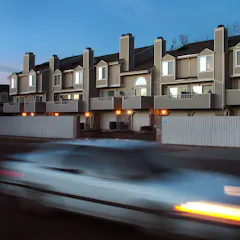
Colorado is facing a housing shortage - building more duplexes and townhomes could be part of the solution

Stefan Chavez-Norgaard, University of Denver; Susan D. Daggett, University of Denver

A housing simulator predicts that rezoning for ‘missing middle’ housing could increase Denver’s housing supply by 46%.

How journalists and communities work together to confront low levels of trust

Danielle K. Brown, Michigan State University

Although it’s important that journalists practice diligence and deference, communities need to be willing to engage, forgive and voice concern.

Trending on site

Today's video

A clear plastic cup filled halfway with water is held up. A snippet of DNA is floating inside. The cup is surrounded by bits of DNA.
 

About The Conversation

We're a nonprofit news organization dedicated to bringing you facts and trustworthy analysis to help you make sense of our complex world. We can give away our articles thanks to the generosity of readers like you. Learn more about us

Support our work

More from The Conversation

Follow The Conversation

You can find us on all your favorite platforms:

YouTubeBlueskyFacebookTikTok

LinkedInInstagramMastodon

• Or get occasional texts from us