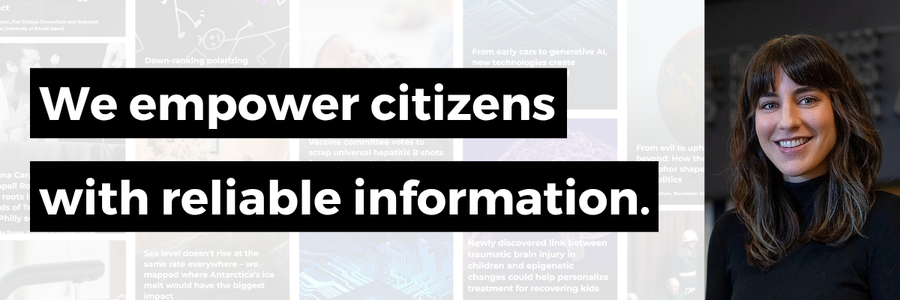
Information is powerful, and we provide it – thanks to you
͏ ͏ ͏ ͏ ͏ ͏ ͏ ͏ ͏ ͏ ͏ ͏ ͏ ͏ ͏ ͏ ͏ ͏ ͏ ͏ ͏ ͏ ͏ ͏ ͏ ͏ ͏ ͏ ͏ ͏ ͏ ͏ ͏ ͏ ͏ ͏ ͏ ͏ ͏ ͏ ͏ ͏ ͏ ͏ ͏ ͏ ͏ ͏ ͏ ͏ ͏ ͏ ͏ ͏ ͏ ͏ ͏ ͏ ͏ ͏ ͏ ͏ ͏ ͏ ͏ ͏ ͏ ͏ ͏ ͏ ͏ ͏ ͏ ͏ ͏ ͏ ͏ ͏ ͏ ͏ ͏ ͏ ͏ ͏ ͏ ͏ ͏ ͏ ͏ ͏ ͏ ͏ ͏ ͏ ͏ ͏ ͏ ͏ ͏ ͏
Dear Reader,
For 14 years, I’ve covered politics and policy in the South, from running a daily newspaper to managing a community-led reporting program.
I’ve seen firsthand how often the powerful systems that shape people's lives – from county commissions to federal courtrooms – feel opaque and inaccessible. As an editor on the Politics & Society desk, I'm proud to publish stories that help make those systems easier to understand and navigate.
|
|
|
You shouldn't need a background in political science to understand a decision that's going to affect your life. Our articles are for people who aren’t steeped in public policy but nonetheless want to stay informed – stories without spin, from sources they can trust. Experts aren’t just quoted in our stories; they write them, distilling decades of knowledge and experience into an understandable 800 or so words.
That’s why I joined The Conversation’s team this year. This model is unique and very important in a time when independent journalism is threatened.
The U.S. has lost more than 270,000 newspaper jobs and nearly 3,500 newspapers in the past two decades. Meanwhile, about half of U.S. adults say they find it hard to determine whether the news they’re reading is true, and 42% say they often encounter news they think is inaccurate. Making matters worse, there’s now a flood of AI-generated news slop.
When so much of your newsfeed invites skepticism, we give you stories you can trust since they’re written by researchers in collaboration with professional journalists. But evidence and knowledge are only as useful as they are accessible, which is why The Conversation’s stories are free to read and free for other news organizations to republish.
If you value our work and want it to continue, I hope you’ll consider supporting us and joining our mission to unlock expert knowledge for the public good. You’ll ensure that trustworthy news (written by humans) will continue showing up in your newsfeed, and on the screens of millions of Americans.
|
|
|
 |
Heather Buckner Politics + Society Editor |
|
|
|
The Conversation US, Inc. is a tax-exempt public charity under section 501(c)(3) of the U.S. Internal Revenue Code. All donations made are fully tax deductible if you itemize. Our tax ID number is 46-0906774.
How to donate:
On the donate page on the website, please use the custom box to choose your contribution level, if it is different from the buttons above. If possible, please check with your employer if they will match your gift.
By credit card, please click here.
(The online donation system has a minimum threshold of $5.)
By check: mail to The Conversation U.S., 303 Wyman St., Suite 300, Waltham, MA 02451.
With stock: Please write to our Chief Development Officer, Priyanka, if you are considering a gift of stock or a gift from your IRA. If you are in your 70s or older, do check with your financial advisor about how you could support us with a gift from your IRA.
|
|
|
|
|
303 Wyman Street, Suite 300 Waltham, MA 02451
|
|
|
|
|
|
|
|