Killer AI drones are more reality than fiction

Plus: Two midterms that made a difference |

US Edition - Today's top story: Russia-Ukraine war is accelerating the dangerous race toward fully autonomous drones

September 23, 2026

US Edition

The Conversation
 

Top headlines

Lead story

Swarms of autonomous drones making real-time decisions on what to hit and who to kill, without the need of a green light from a human operator.

Pretty scary stuff. But according to Amy McAuliffe, a former senior CIA official now teaching at the University of Notre Dame, that is where we might be heading.

Her piece today assesses the advances made in AI drones by Russia and Ukraine since the beginning of fully fledged war in February 2022. “As the war has progressed, both sides have added autonomous features to existing drones, as well as developed new drones with autonomous capabilities … [that use] AI on the battlefield to recognize targets, navigate and self-guide to targets,” McAuliffe writes.

Although the advancement has clear battlefield advantages – autonomous drones cut the risk of being derailed by jamming efforts, for example – it comes with huge ethical risks. Of particular concern, McAuliffe notes, is the growing perception that technological advances are outpacing the frameworks in place to maintain human control.

Our best stories of the week on science and health, hand-selected by our editors.

 

Matt Williams

Senior International Editor

 
A Ukrainian soldier remotely controls an interceptor drone on Sept. 1, 2026. Alex Nikitenko/Global Images Ukraine via Getty Images

Russia-Ukraine war is accelerating the dangerous race toward fully autonomous drones

Amy McAuliffe, University of Notre Dame

Drones with autonomous functions reduce dependence on communications links and can escape attempts at jamming. But they come with huge ethical risks.

Health + Medicine

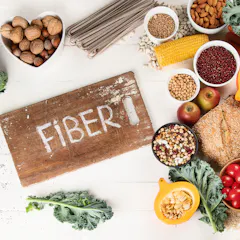
Fiber is both diet fad and fixture for good health – a doctor explains why there is no one-size-fits-all way to increase your intake

Jean Liew, Boston University

Americans aren’t getting enough fiber in their diets. Luckily, there is a plethora of ways you can increase your daily dose of fiber without upsetting your stomach or breaking the bank.

Dementia caregiving can expose hidden family tensions – but early planning can ease the strain

Sarah E. Patterson, University of Michigan

The demands of caregiving can reverberate through family relationships, exposing old disagreements about expectations and responsibilities.

Environment + Energy

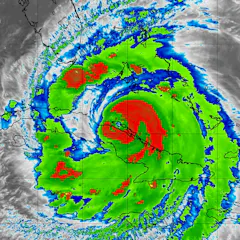
Why AI has trouble predicting the fury of hurricane intensity

Chanh Kieu, Indiana University

Storms like 2026’s Hurricane Polo that rapidly intensify can catch communities off guard and leave little time to prepare or evacuate. Being able to forecast those risks can save lives.

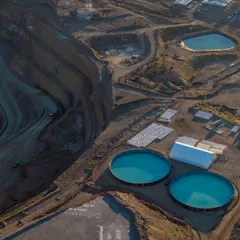
How the US gave up its edge to China in processing vital rare earth minerals – and what that’s costing

Charles Edward Gehrke, Massachusetts Institute of Technology (MIT)

Today, China controls the vast majority of rare earths processing. That gives it enormous political leverage, and its trade truce with the US involving those minerals expires Nov. 10, 2026.

Lessons for the 21st century from a 200-year-old book by ‘Frankenstein’ author Mary Shelley

Eileen Hunt, University of Notre Dame

The catastrophic story is familiar, but the insight, and the ending, offer an opportunity, and perhaps motivation, for modern readers.

Politics + Society

Election officials are fighting wavering voter trust by making mundane processes visible and recruiting citizens to help

Robert Glover, University of Maine

A midterm election is coming. In the face of wavering voter trust – some of it driven by forces outside their control – what can election officials actually do to keep elections credible?

2 midterm elections that brought on new eras in US politics

Robert A. Strong, University of Virginia

Two 19th-century elections are a reminder that a sizable midterm shift, like the one expected in November, can signal long-lasting changes in American politics that set the country in a new direction.

Science + Technology

Finding homes for whales and dolphins when parks like Marineland Canada close isn’t easy – a biologist explains why sea sanctuaries aren’t the answer

Jason Bruck, Stephen F. Austin State University

Sea sanctuaries could work well for some animals, but up to this point, only a handful of animals have lived in them.

International

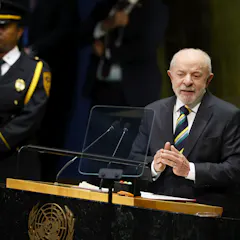
Lula’s UN address points to two starkly different visions of Brazilian nationalism ahead of crucial election

Andre Pagliarini, Louisiana State University

The race between the incumbent president and Flávio Bolsonaro is a part of a decades-long right-left split in the country over the meaning of the nation.

Democracy needs its champions. Here’s a proposal on how to fund them

Sarah Burton, L’Université d’Ottawa/University of Ottawa; Michael Karanicolas, Dalhousie University; Institute for Humane Studies

By setting up a fund supported by those who violate Canadian laws to assist groups that protect civil rights, Canada can invest in democracy’s strongest defence: robust, free and open speech.

Trending on site

Today's chart

Bars show growing chance of a strong El Niño.
Read the article
 

About The Conversation

We're a nonprofit news organization dedicated to bringing you facts and trustworthy analysis to help you make sense of our complex world. We can give away our articles thanks to the generosity of readers like you. Learn more about us

Support our work

More from The Conversation

Follow The Conversation

You can find us on all your favorite platforms:

YouTubeBlueskyFacebookTikTok

LinkedInInstagramMastodon

• Or get occasional texts from us