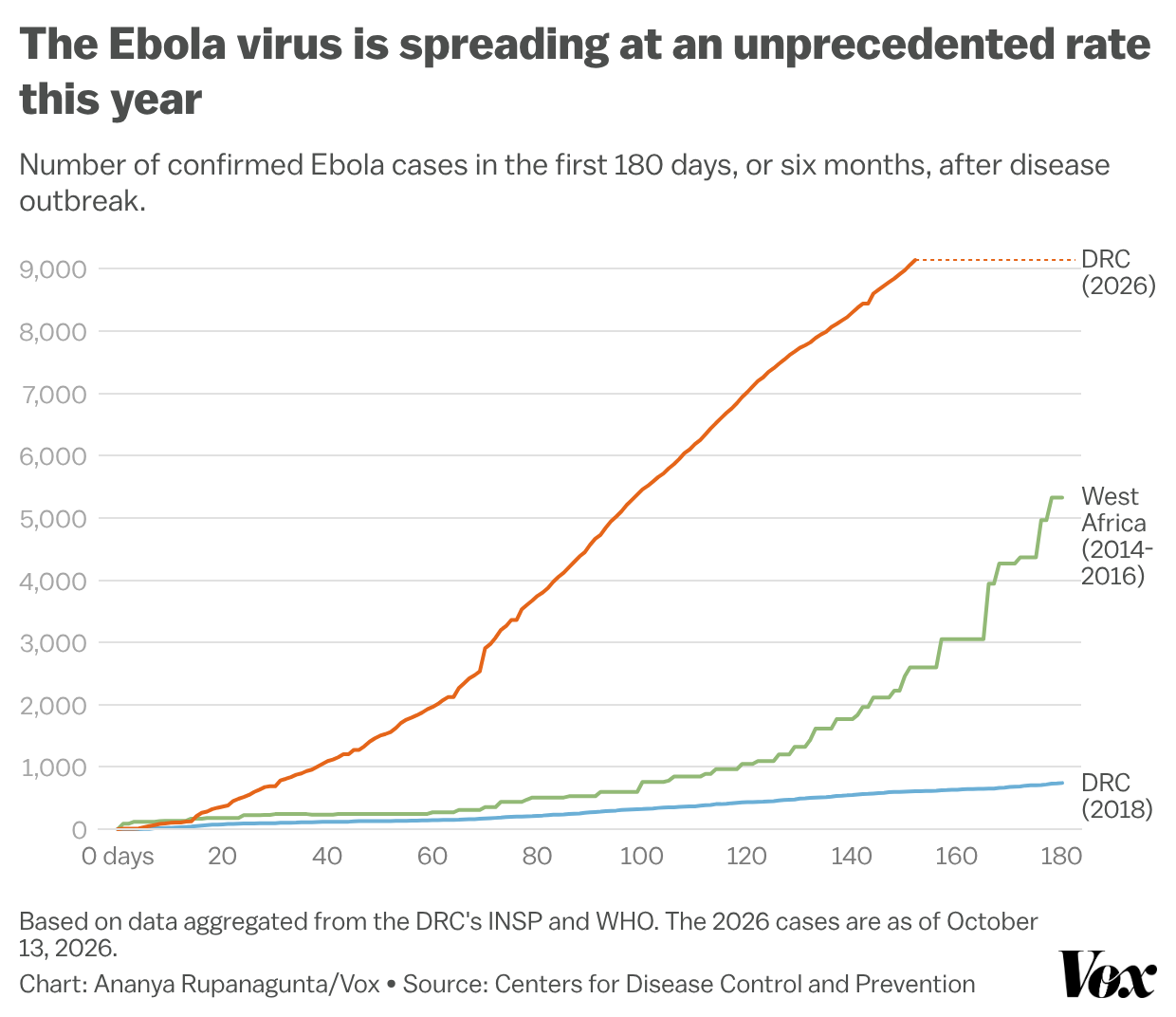
There is no straightforward explanation for this rapid spread
One of the reasons the latest epidemic has been so difficult to slow down can be traced back to the fact that it’s a different viral strain — known as Bundibugyo — than the ones behind previous epidemics.
The Bundibugyo virus comes from the same family as the Ebola virus that caused the 2014 West Africa and 2018 Congo epidemics, causing the fatal fevers associated with Ebola. But the rare strain is different enough that it doesn’t respond to the same medical solutions. While the Zaire virus led to vaccines and treatment to mitigate the spread, we still don’t have a vaccine for Bundibugyo.
That doesn’t mean Bundibugyo is entirely novel, though. The 2026 outbreak is the third outbreak related to the Bundibugyo viral strain: In 2007, Uganda faced a minor outbreak, and the eastern province of Congo, which is now the epicenter of the epidemic, saw a handful of cases in 2012.
Luckily, these two outbreaks were contained in a span of months, largely due to efforts by the country’s Ministry of Health and international aid partnerships with the WHO, the US Agency for International Development (USAID), and international humanitarian organizations such as the UN Children’s Fund and Red Cross.
More than a decade later, these efforts have been substantially curbed by USAID cuts. Tracing requires physical testing capacity: the tests themselves, health workers, and protective equipment for those treating suspected cases. Reduced access to such resources is especially dangerous with strains like Bundibugyo – in the absence of an effective vaccine, tracing the spread of disease and isolating potential disease contacts is especially important.
But cuts to aid, which covers disease surveillance efforts, made it more difficult to identify this year’s Bundibugyo outbreak until it was too late, creating a “critical four-week detection gap between the onset of symptoms of the presumed index case…and the laboratory confirmation of the outbreak,” according to a WHO situation report from May.
In August, the United States aimed to close at least some part of the vacuum it left, providing an additional $242 million to its $23 million original pledge in May.
Aside from international efforts, DRC faces the added layer of internal conflict and humanitarian crisis. The eastern provinces, including Ituri, have experienced years of conflict that have weakened the public infrastructure, including the healthcare system. Last year, nearly 25 percent of Congolese people faced food insecurity, and 4.5 million children were clinically malnourished, creating a population especially vulnerable to disease. The violence has also overwhelmed hospitals and displaced millions, disrupting the public health response, especially as mistrust in health authorities also runs rampant.
Even as emergency trials for a vaccine are underway, many of the factors that have facilitated the rapid spread may make treatment and outreach still more difficult. It’s hard to predict when the current outbreak will be handled, and how many more people will be affected before it does.