Plus: Dolly Parton's Imagination Library lives on |
|
|
| |
Top headlines
Lead story
To Amherst College social psychologist Catherine Sanderson, what stood out about the alleged sexual assault at Cornell that’s currently dominating headlines was not the seven men directly accused. It was the 50 other fraternity members who were reportedly on a group chat about what was happening and who apparently failed to intervene.
Why do bystanders so often fail to step in and stop bad behavior?
Sanderson writes that one big reason is that people often misjudge what others believe to be normal and acceptable.
This tendency to “misperceive what others are actually thinking and feeling” is a part of human nature, she writes. But it doesn’t need to be the end of the story. Sanderson points out that understanding these normal psychological factors is a critical first step in learning strategies for how to intervene.
Sign up for our newsletter on how AI is impacting society. Every Friday.
|
| |
 |
Maggie Villiger Senior Science + Technology Editor |
|
|
| |

People may quash their own beliefs to fit in with what they think the group believes. Andrew Lichtenstein/Corbis News via Getty Images
Catherine A. Sanderson, Amherst College People may accept bad behavior – even sexual assault – when they overestimate how acceptable their peers think it is. But there are ways to undermine this thinking and make intervention more likely. |
Economy + Business |
 |
Tzachi Zach, The Ohio State University No federal rule proposal has ever generated so much opposition. |
|
|
Politics + Society |
 |
Austin Sarat, Amherst College The constitutional prohibition of cruel and unusual punishment has shaped legal discourse around failed executions, but courts have not stopped states from attempting to execute the same person again. |
|
 |
Patrick Egan, New York University; James Bisbee, Vanderbilt University; Joshua A. Tucker, New York University Nearly 1 in 7 white men under 30 in the US support white nationalism, and partisanship alone doesn’t explain who’s drawn to it. |
|
|
Arts + Culture |
 |
Susan Farrell, College of Charleston The battle over the novel offers a window into America’s long-running fight over what students should be allowed to read. |
|
|
Education |
 |
Alex H. Poole, Drexel University This free program mails an age-appropriate book monthly to each enrolled child from birth to age 5. |
|
|
International |
 |
Sara Harmouch, George Washington University More women are taking up training and recruiting positions in the Islamic State group and other militant organizations. |
|
|
Ethics + Religion |
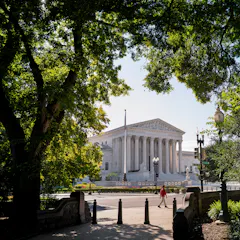 |
Mark Satta, Wayne State University; Institute for Humane Studies When the Supreme Court hears arguments in St. Mary Catholic Parish v. Roy, Colorado will defend antidiscrimination laws for the fourth time in 10 years. |
|
|
Science + Technology |
 |
Monideepa Tarafdar, UMass Amherst Prompting AI models to contradict your ideas can improve your thinking about a problem. |
|
 |
Artemis Spyrou, Michigan State University; Andrea Richard, Ohio University Particle accelerators aren’t just for testing the Standard Model. They’re also used to diagnose and treat disease and study world history. |
|
|
Podcast 🎙️ |
 |
Isabella Podwinski, The Conversation; Justin Bergman, The Conversation On The Conversation Weekly, why Israel’s political magician might be out of tricks and how a former IDF chief could be the one to upstage him. |
|
|
|
|
The Conversation's News Quiz |
A co-pilot stabbed the captain and nearly crashed the plane before passengers and crew stormed the cockpit during a Sept. 30 flight on which budget airline? |
|
|
|
|
|
|
|
|
|
|
|
|
| |
About The Conversation |
We're a nonprofit news organization dedicated to bringing you facts and trustworthy analysis to help you make sense of our complex world. We can give away our articles thanks to the generosity of readers like you. Learn more about us
|
|
|
|
|
More from The Conversation |
Like this newsletter? You might be interested in our other emails:
|
Follow The Conversation |
You can find us on all your favorite platforms:
• YouTube • Bluesky • Facebook • TikTok
• LinkedIn • Instagram • Mastodon
• Or get occasional texts from us
|
| |
| |
|
|
|
|